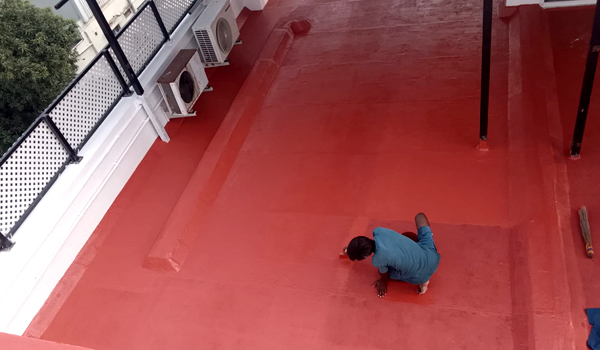
Cracks in the Terrace Surface
Concrete surfaces can develop cracks because of ageing, thermal movement, shrinkage and structural or surface-related conditions. Even relatively small cracks can become pathways for rainwater.
Damaged Waterproofing Layer
An old or deteriorated waterproofing system may lose its ability to resist water penetration. Peeling, blistering, debonding or damaged coatings can indicate that the existing system needs professional assessment.
Poor Drainage
Water should flow efficiently towards terrace outlets. Blocked or poorly positioned drainage points can cause water to remain on the surface for extended periods.
Parapet and Junction Areas
The junction between the terrace slab and parapet wall can become vulnerable when joints, cracks or previous waterproofing treatments have deteriorated.
Service Pipe and Penetration Points
Pipes, electrical conduits and other penetrations passing through the terrace can create weak points if they have not been properly sealed.
Sidewall Water Penetration
Sometimes the visible ceiling leakage may be associated with water entering through an external wall or sidewall rather than directly through the terrace surface.
How Can You Identify the Source of Terrace Leakage?
Finding the actual source is one of the most important parts of waterproofing.
The location of an indoor damp patch does not necessarily indicate the exact point where water entered the building.
Water can travel through:
- Concrete pores
- Cracks
- Construction joints
- Pipe penetrations
- Slab interfaces
- Masonry
- Parapet junctions
A professional inspection should therefore examine both the visible leakage area and the terrace above it.
Inspect the Terrace Surface
Look for:
- Visible cracks
- Ponding water
- Damaged coatings
- Open joints
- Surface deterioration
- Vegetation growth
- Loose or hollow areas
- Drainage problems
Check the Parapet and Wall Junctions
The terrace-to-wall junction is particularly important because movement and weather exposure can affect this area over time.
Examine Drainage Points
Blocked outlets can cause water accumulation and increase the amount of time the terrace remains wet.
Why Simply Filling the Visible Crack May Not Solve the Problem
One of the common mistakes property owners make is treating only the visible crack or damp patch.
For example, if a ceiling develops a water stain, painting over the stain does not remove the source of water.
Similarly, filling one visible crack may not solve the problem if water is entering through:
- Another crack
- A construction joint
- A pipe penetration
- The parapet junction
- A deteriorated waterproofing layer
- An adjacent wall
This is why a proper terrace leakage solution should begin with inspection and diagnosis.
The treatment should be selected according to the condition of the substrate, extent of leakage, exposure to weather, existing waterproofing system and other site conditions.
Terrace Waterproofing Methods
There is no single waterproofing method that is suitable for every terrace.
The appropriate system depends on the condition of the existing surface and the nature of the water leakage.
Some commonly used approaches include:
Chemical Waterproofing
Chemical waterproofing involves applying suitable waterproofing compounds or coatings to prepared surfaces.
It may be considered for appropriate terrace surfaces where the substrate and existing conditions allow this type of treatment.
Bitumen Waterproofing
Bitumen-based systems can provide a membrane-type waterproofing barrier when properly specified and installed.
For suitable projects, APP modified bitumen membranes may be used as part of a terrace waterproofing system.
PU Chemical Coating
Polyurethane-based waterproofing systems can be used in suitable applications where a seamless coating system is required.
The surface preparation, product selection and application procedure are important factors in achieving the intended performance.
What Is the Terrace Waterproofing Process?
A professional waterproofing project should follow a planned sequence rather than simply applying a coating over the existing surface.
A typical process may include:
Step 1 — Site Inspection
The terrace and affected areas are inspected to understand the likely source and extent of water penetration.
Step 2 — Surface Preparation
Dust, loose material, deteriorated coatings and other contaminants are removed as required.
Step 3 — Crack and Joint Treatment
Visible cracks, joints and vulnerable areas are treated according to their condition and the selected waterproofing system.
Step 4 — Drainage and Detail Inspection
Drainage outlets, pipe penetrations, parapet junctions and other critical points are checked.
Step 5 — Waterproofing Application
The selected waterproofing system is applied according to the manufacturer’s technical requirements and project conditions.
Step 6 — Detailing
Corners, junctions, penetrations and other vulnerable areas receive appropriate attention.
Step 7 — Final Inspection
The completed work is inspected to check coverage, detailing and overall finish.
“Good waterproofing starts with finding the source of the water, not simply covering the place where the stain appears.”
How to Choose the Right Terrace Waterproofing System
Before selecting a system, consider the actual site condition.
Important factors include:
Age and Condition of the Terrace
An older terrace may require more extensive preparation before a new waterproofing system can be applied.
Existing Waterproofing
If an old waterproofing layer is already present, its condition and compatibility with the proposed treatment should be assessed.
Extent of Leakage
A localized issue may require a different treatment from widespread terrace leakage.
Water Ponding
Persistent standing water should not be ignored. Drainage conditions should be assessed before or alongside waterproofing work.
Movement and Cracking
Recurring cracks or movement-related areas require appropriate detailing rather than simply applying additional coating.
Can Terrace Waterproofing Stop Leakage Permanently?
A more accurate way to look at waterproofing is long-term protection, rather than assuming that one treatment can guarantee permanent protection under every condition.
The performance of a waterproofing system depends on:
- Correct diagnosis
- Suitable material selection
- Proper surface preparation
- Correct application
- Detailing of vulnerable areas
- Drainage
- Building movement
- Weather exposure
- Maintenance
- Future alterations to the terrace
A professional contractor should assess the actual terrace condition before recommending a system.
How to Maintain a Waterproofed Terrace
Waterproofing should not be treated as a one-time activity that can be forgotten after completion.
Regular inspection can help identify problems before they become major leakage issues.
Keep Drainage Outlets Clear
Remove leaves, dirt and other materials that can obstruct water flow.
Inspect Cracks Periodically
New cracks should be evaluated rather than ignored.
Avoid Unplanned Drilling
Installing equipment, pipes, supports or other fixtures can damage a waterproofing layer.
Check During and After Heavy Rain
Rainy periods can reveal areas that require attention.
Don’t Delay Repairs
A small leakage problem can become more complicated if water continues to enter the building.
When Should You Call a Terrace Waterproofing Contractor?
Consider getting a professional inspection if you notice:
- Repeated ceiling dampness
- Water stains after rainfall
- Terrace ponding
- Cracks in the terrace
- Peeling waterproofing coating
- Damp parapet walls
- Leakage around pipes
- Recurring leakage after previous waterproofing
- Water entering through terrace-wall junctions
If the problem keeps returning after temporary repairs, it is especially important to investigate the underlying cause rather than repeatedly treating the visible symptom.
For professional Terrace Waterproofing Services in Chennai, Waterproofing Engineers can inspect the site and recommend a suitable approach based on the actual condition.
Terrace Waterproofing in Chennai
Chennai buildings experience exposure to intense sunlight, seasonal rainfall and changing weather conditions. Terrace surfaces are therefore exposed to repeated thermal and moisture-related stresses.
For property owners searching for terrace waterproofing in Chennai, the most important consideration should be the suitability of the waterproofing system for the actual building condition.
Waterproofing Engineers provides waterproofing solutions for residential, commercial and other building requirements across Chennai.
Our service areas include:
Anna Nagar, Adyar, Velachery, Tambaram, Porur, T. Nagar, Ambattur, Avadi, Mogappair, Kolathur, Pallikaranai, Medavakkam, Sholinganallur, OMR, ECR, Perungudi, Thoraipakkam, Guindy, Vadapalani, Ashok Nagar, K.K. Nagar, Mylapore, Besant Nagar, Chromepet, Navalur and Siruseri.
Frequently Asked Questions About Terrace Leakage
What is the most common reason for terrace leakage?
Cracks, deteriorated waterproofing, poor drainage, joints, pipe penetrations and vulnerable terrace-wall junctions can contribute to leakage. The actual cause should be identified through site inspection.
Can terrace leakage be repaired without replacing the entire terrace?
In some situations, a suitable waterproofing system can be applied after proper preparation without completely rebuilding the terrace. The appropriate approach depends on the existing surface and extent of damage.
How long does terrace waterproofing last?
The service life varies according to the waterproofing system, workmanship, substrate condition, weather exposure, drainage and maintenance. A contractor should evaluate the specific project before making a lifespan claim.
Is chemical waterproofing suitable for every terrace?
No. Different terraces have different conditions. Chemical waterproofing should be selected after considering the substrate, leakage problem and required waterproofing performance.
Is bitumen waterproofing suitable for terraces?
Bitumen-based membrane systems can be suitable for certain terrace applications. Proper substrate preparation, membrane installation and detailing are essential.
For more common questions, visit our FAQs page.
Why Choose Waterproofing Engineers?
Waterproofing is ultimately about protecting a building from recurring water-related problems.
Waterproofing Engineers combines technical experience, skilled workmanship and practical site knowledge to provide waterproofing solutions for different building requirements.
Our approach focuses on:
- Technical site inspection
- Suitable waterproofing methods
- Quality materials
- Proper surface preparation
- Detailed workmanship
- Clear communication
- Project-specific solutions
- Customer satisfaction
Need Help With Terrace Leakage?
If your terrace is leaking repeatedly, don’t rely only on repainting or temporary crack filling.
The right starting point is to understand where the water is entering, why the existing protection has failed and which waterproofing system is appropriate for the site.
Waterproofing Engineers provides terrace waterproofing solutions in Chennai based on the condition and requirements of each project.
CTA