
Terrace Water Leakage During Rain: Causes and Solutions
Rain should drain away from a properly protected terrace. But when water starts appearing on the ceiling, walls or top-floor rooms every time it rains, the problem should not be dismissed as normal ageing.
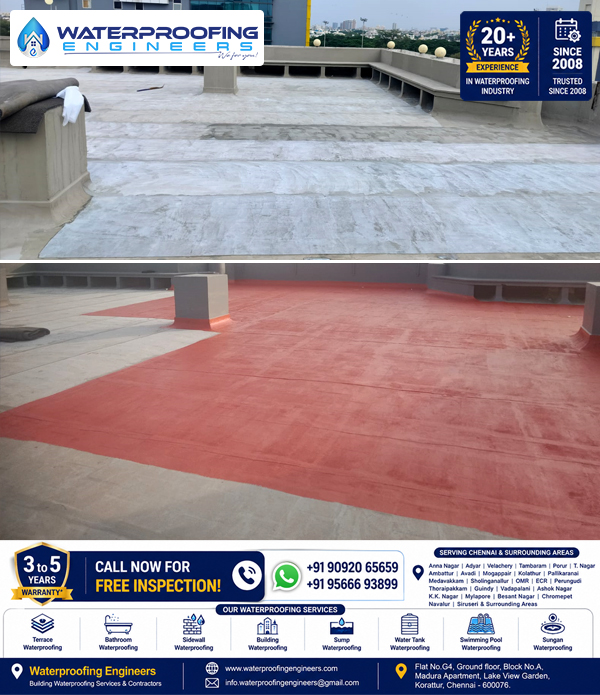
Terrace water leakage is usually a symptom of a weakness somewhere in the roof waterproofing system.
The weakness may be a crack, porous concrete, damaged previous waterproofing, poor drainage, a construction joint, pipe penetration, parapet junction or another vulnerable location.
The frustrating part is that the visible indoor leakage point may not be directly below the actual entry point. Rainwater can travel through concrete and joints before appearing inside the building.
That is why repeatedly patching the ceiling may hide the symptom without solving the terrace leakage.
When rain reveals the problem, inspect the terrace—not just the ceiling.
Get Free Inspection
If your terrace leaks whenever there is heavy rain, arrange a professional inspection before applying another temporary patch. Identifying the water-entry pathway early can help prevent further moisture-related damage.
What Causes Terrace Water Leakage During Rain?
A terrace is exposed to sunlight, rainfall, temperature changes and moisture throughout the year. Over time, these conditions can affect exposed surfaces and waterproofing systems.
Common causes include:
- Cracks in the roof slab
- Porous or deteriorated concrete
- Failed or ageing waterproofing
- Water stagnation
- Blocked rainwater outlets
- Poor drainage or inadequate slope
- Construction and expansion joints
- Leakage around pipe penetrations
- Terrace-to-parapet junctions
- Damaged tiles or surface finishes
- Poor previous repair work
- Inadequate surface preparation
Waterproofing Engineers identifies cracks, joints, porous concrete, ponding water, damaged waterproofing layers, expansion joints and pipeline areas among common terrace leakage problems.
Problem: Why Does the Leakage Appear Only When It Rains?
This is one of the most common questions from property owners.
A terrace may remain apparently dry during normal weather but leak during heavy rainfall because the roof is receiving a much larger volume of water within a short period.
When rainfall increases, water can reach weak points faster than the surface can drain.
Typical Warning Signs
Look for:
- Damp ceiling patches after rain
- Water dripping from the top floor
- Peeling interior paint
- Dark or discoloured ceiling areas
- Efflorescence or white salt deposits
- Mold or mildew
- Terrace cracks
- Standing water
- Damp parapet walls
- Leakage around rainwater outlets
- Recurring leakage after previous waterproofing
A ceiling stain should not automatically be assumed to indicate a leak directly above it. Water can travel through the slab before appearing indoors.
Inspection: Find Where the Water Is Entering
The first technical step is inspection.
Instead of immediately selecting a waterproofing chemical, the terrace should be examined to understand its current condition.
A professional inspection should consider:
Terrace Surface
Check for cracks, weak areas, damaged coatings, loose finishes and signs of deterioration.
Drainage
Rainwater outlets should be checked for blockage, ponding and drainage-related problems.
Joints and Junctions
Construction joints, expansion joints, parapet-wall junctions and other interfaces can become vulnerable points.
Pipe Penetrations
Waterproofing around pipes and service penetrations requires careful attention because these areas interrupt the continuity of the waterproofing layer.
Previous Waterproofing
Old coatings should be assessed for peeling, cracking, loss of adhesion and compatibility with any proposed new system.
Interior Symptoms
Ceilings and walls below the terrace can provide useful evidence about the extent and timing of water ingress.
The current terrace waterproofing process used by Waterproofing Engineers follows inspection, surface preparation, waterproofing-system selection, professional application and final quality inspection.
Diagnosis: Identify the Actual Leakage Cause
Inspection tells you what is visible. Diagnosis connects those observations to the likely water-entry pathway.
For example, if water appears inside only during heavy rainfall and the terrace has ponding near a damaged outlet, drainage may be contributing to the problem.
If leakage is concentrated around a construction joint, joint treatment or injection grouting may need consideration.
If the terrace has widespread surface deterioration, an overall waterproofing system may be more appropriate than isolated patching.
If previous waterproofing has failed, simply applying another layer over the old surface may not be the correct approach.
The right waterproofing solution is selected according to the problem, not simply according to the product available.
Waterproofing Engineers states that its waterproofing applications are selected after evaluating factors such as leakage source, concrete condition, water pressure, crack pattern, building age, previous repairs, weather exposure and area usage.
Waterproofing Methods for Terrace Water Leakage
1. Chemical Waterproofing
Chemical waterproofing can be considered for suitable concrete terraces where a protective waterproofing system is required.
The performance depends on appropriate surface preparation, compatible materials and correct application.
It may be used for selected terrace leakage and seepage conditions rather than being treated as a universal solution.
Explore Chemical Waterproofing Services.
2. PU Chemical Coating
Polyurethane coating can create a seamless and flexible waterproofing layer over suitable exposed surfaces.
It may be considered where flexibility and resistance to weather exposure are important.
However, the substrate condition, moisture level, existing coating and movement characteristics should be assessed before selecting the system.
Explore PU Chemical Coating
3. Bitumen Waterproofing
Bitumen waterproofing provides a membrane-based approach that can be suitable for appropriate terraces and large roof areas.
Correct preparation, membrane installation, overlaps, terminations and detailing are important to performance.
Explore Bitumen Waterproofing Services.
For suitable terraces, membrane systems such as APP-modified bitumen may be considered depending on project requirements.
4. Chemical Grouting
When water is actively travelling through cracks, construction joints or voids, a surface coating alone may not address the actual water pathway.
Chemical grouting uses controlled injection to treat suitable internal leakage paths.
It can be considered for:
- Active water leakage
- Concrete cracks
- Construction joints
- Voids
- Pipe penetration leakage
- Difficult water-entry points
Explore Chemical Grouting Services.
Chemical grouting is specifically used for suitable active leakage conditions where injection treatment is appropriate.
5. PU Chemical Grouting
PU chemical grouting can be considered for selected active water leakage conditions where injection treatment is required.
The correct material and injection procedure depend on leakage severity, crack characteristics, water pressure and structural conditions.
Explore PU chemical grouting
6. Crystalline Treatment
Crystalline treatment works differently from a conventional surface coating. For suitable concrete structures, the treatment can help block water pathways within the concrete.
It may be considered where the structure and leakage condition are compatible with crystalline waterproofing.
Explore Waterproofing Applications.
The official applications page lists crystalline treatment among the waterproofing systems used according to structural and leakage conditions.
Execution: Waterproofing Is More Than Applying a Coating
Choosing the method is only part of solving terrace water leakage.
Execution quality can determine whether the waterproofing system performs as intended.
A professional execution sequence may include:
- Detailed site inspection
- Leakage diagnosis
- Cleaning and surface preparation
- Removal of weak or failed material
- Crack treatment
- Joint and junction treatment
- Drainage assessment
- Primer or compatible preparation where required
- Application of selected waterproofing system
- Reinforcement or detailing at vulnerable locations where specified
- Curing or setting as required
- Final quality inspection
The official terrace service process similarly emphasizes surface preparation, appropriate system selection, professional application and quality inspection.
Call Now / WhatsApp
If terrace water leakage appears every time it rains, do not choose a waterproofing method based only on a product name or a neighbour’s experience.
Get the leakage source assessed and discuss the appropriate waterproofing approach for your terrace.
Result: What Should the Waterproofing Achieve?
The objective is not simply to make the terrace look fresh.
A properly selected and executed system should aim to:
- Reduce rainwater penetration
- Address identified leakage pathways
- Protect vulnerable concrete surfaces
- Reduce recurring seepage
- Improve resistance to weather exposure
- Treat relevant cracks and joints
- Protect interior areas from moisture-related deterioration
- Support longer-term building maintenance
However, waterproofing performance depends on several factors, including substrate condition, drainage, workmanship, weather exposure, maintenance and later alterations.
A waterproofing system should therefore be viewed as part of a building-protection strategy rather than as a cosmetic coating.
Warranty: What Property Owners Should Understand
A waterproofing warranty provides protection according to the agreed project scope and conditions.
It should not be interpreted as meaning that the terrace requires no maintenance.
Rainwater outlets should remain clear. New cracks, drilling, construction modifications, physical damage and prolonged water stagnation should be addressed promptly.
Before starting the project, confirm:
- Warranty duration
- Areas covered
- Waterproofing system specified
- Surface preparation included
- Crack/joint treatment included
- Conditions that may affect warranty coverage
- Maintenance requirements
Waterproofing Engineers describes its work as warranty-supported, with the exact project terms depending on the selected system and agreed scope.
For broader building protection, see Building Waterproofing Services.
Customer Testimonial
“We had been struggling with terrace leakage every monsoon and after trying a few temporary fixes, we contacted Waterproofing Engineers. Their team inspected the terrace thoroughly, explained the actual cause of the problem and completed the work professionally.”
10 Frequently Asked Questions About Terrace Water Leakage
1. Why does my terrace leak only when it rains?
Rain increases water exposure and can reveal weak points such as cracks, joints, porous concrete, damaged waterproofing or drainage problems.
2. Can a small terrace crack cause water leakage?
Yes, a crack can become a water-entry pathway, although the significance depends on its size, location, pattern and surrounding concrete condition.
3. Why does my ceiling leak even though there is no crack directly above it?
Water can travel through concrete and joints before appearing at a different location inside the building.
4. Can painting the ceiling stop terrace leakage?
No. Interior painting can improve appearance temporarily but does not normally address the external source of water ingress.
5. What is the best solution for terrace leakage?
There is no single solution for every terrace. The appropriate method depends on the leakage source, surface condition, drainage, cracks, joints and existing waterproofing.
6. Can chemical grouting stop active terrace leakage?
Chemical grouting can be suitable for certain active leakage pathways, cracks and joints where injection treatment is appropriate.
7. Is bitumen waterproofing suitable for terraces?
It can be suitable for appropriate terrace and roof conditions, particularly where a membrane-based system is required.
8. Can old terrace waterproofing be repaired?
Sometimes. The existing waterproofing should be inspected for deterioration, adhesion, compatibility and underlying moisture before deciding whether to repair, remove or replace it.
9. Does terrace waterproofing require maintenance?
Yes. Drainage outlets, cracks, surface damage and modifications should be monitored even after waterproofing.
10. When should I call a waterproofing professional?
Arrange an inspection when leakage becomes recurring, appears after heavy rainfall, returns after previous repairs, or is accompanied by cracks, ponding, dampness or damaged waterproofing.
For more general questions, visit Waterproofing Engineers FAQs.
Request a Quote
If your terrace is leaking during every monsoon, the cost of waiting can go beyond the terrace itself.
Water may continue travelling through the slab, affecting ceilings, plaster, paint and other building components.
Request a Quote: Share the terrace leakage symptoms, approximate affected area, previous waterproofing details and when the leakage occurs. A professional site inspection can then help determine the likely cause, suitable waterproofing method, required preparation, execution scope and applicable warranty.
For professional Terrace Waterproofing Services in Chennai, the first step should be understanding the problem before selecting the treatment.
Stop chasing the ceiling stain. Find the water-entry point. Solve the terrace problem.