
Terrace Waterproofing Methods: Which Solution Is Right for Your Roof?
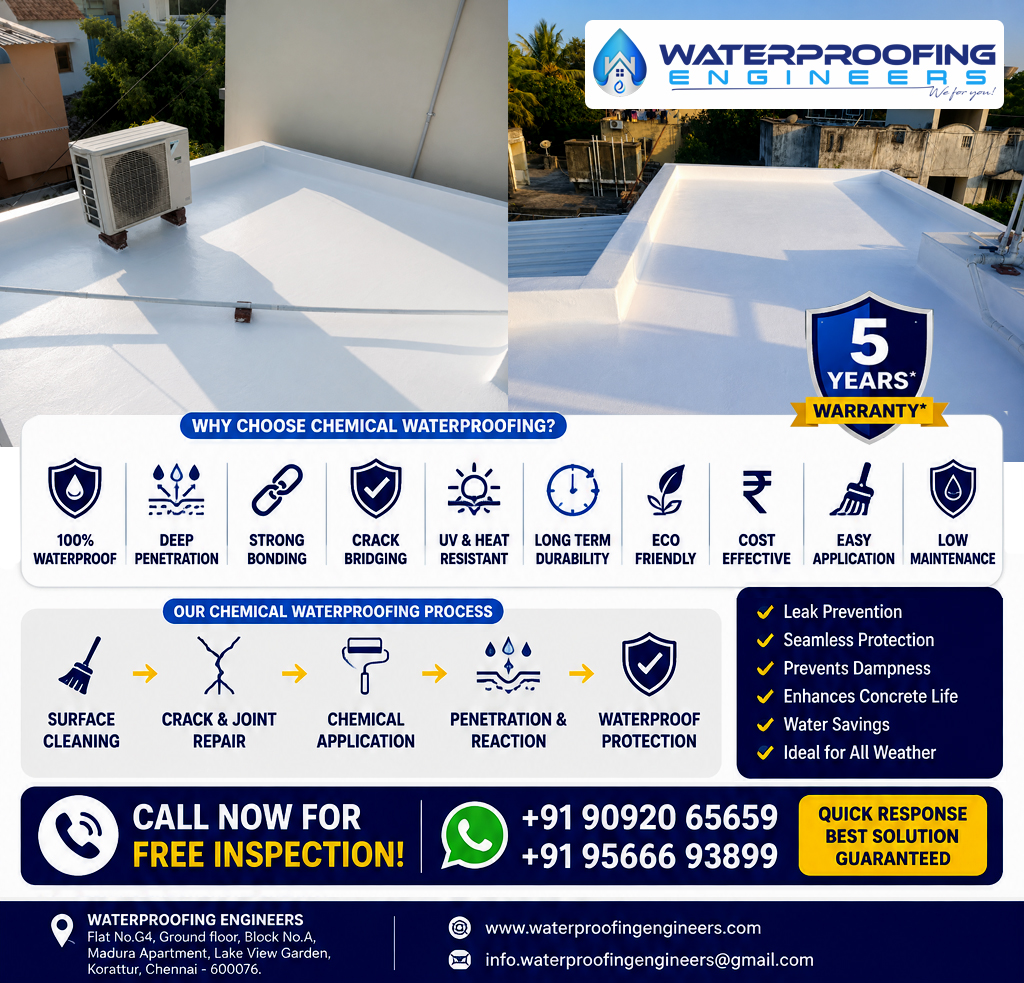
A terrace is continuously exposed to sunlight, rain, humidity, temperature changes and standing water. Over time, these conditions can create cracks, concrete porosity, joint failures, damaged old coatings and leakage around pipe penetrations.
The problem becomes more serious when water starts travelling through the roof slab and appears as damp patches, peeling paint or ceiling leakage inside the building.
But here is the important point: there is no single waterproofing method that is ideal for every terrace.
The correct system depends on the source of leakage, concrete condition, existing waterproofing, crack pattern, drainage, water exposure and building usage. Professional terrace waterproofing therefore begins with inspection rather than immediately selecting a product.
Inspect First. Diagnose Correctly. Select the Right Waterproofing Method.
Get Free Inspection
If your terrace develops leakage during every monsoon or after heavy rainfall, a professional inspection can help identify the likely source before the problem becomes more expensive.
Understanding the Terrace Leakage Problem
Before discussing waterproofing methods, it is important to understand why terraces leak.
Common causes include:
- Cracks in the roof slab
- Porous or deteriorated concrete
- Water stagnation
- Blocked rainwater outlets
- Failed expansion or construction joints
- Damaged previous waterproofing
- Leakage around pipes and penetrations
- Parapet-wall junction problems
- Poor surface preparation during earlier repairs
- Thermal movement and ageing
A visible ceiling stain does not always indicate the exact location where water entered the terrace. Water can travel through concrete and joints before appearing inside the building.
This is why simply applying cement paste, paint or another coating over the visible area may provide only temporary relief.
For a broader understanding of building protection, explore Waterproofing Services.
Inspection: The First Step Before Selecting a Method
A professional terrace waterproofing project should start with a site inspection.
The terrace should be examined for surface condition, cracks, drainage, ponding, existing coatings, joints, pipe penetrations and other vulnerable areas. The building interior can also provide useful clues about the direction and severity of water ingress.
At Waterproofing Engineers, the terrace waterproofing process follows a structured approach: site inspection, surface preparation, waterproofing system selection, professional application and final quality inspection.
What Should Be Checked?
- Existing waterproofing layers
- Concrete strength and surface condition
- Hairline and visible cracks
- Construction and expansion joints
- Water drainage arrangement
- Rainwater outlets
- Pipe penetrations
- Parapet-wall junctions
- Areas with standing water
- Previous repair attempts
A detailed inspection helps prevent the common mistake of choosing a waterproofing system simply because it worked somewhere else.
Diagnosis: Matching the Problem to the Solution
Once the terrace has been inspected, the next step is diagnosis.
For example, a terrace with general concrete porosity may require a different treatment from a terrace with active leakage through a construction joint.
Similarly, a large exposed roof area may require a membrane-based system, while selected cracks or active leakage points may require localized injection treatment.
The current waterproofing applications offered by Waterproofing Engineers include chemical waterproofing, bitumen waterproofing, PU chemical coating, chemical grouting, PU chemical grouting, crystalline treatment and epoxy tile grouting for appropriate applications.
Terrace Waterproofing Methods
1. Chemical Waterproofing
Chemical waterproofing uses specially formulated waterproofing compounds that can form a protective waterproof barrier on or within suitable concrete surfaces.
It can be considered for terraces where the concrete surface and leakage condition are appropriate for a chemical waterproofing system.
Suitable for:
- Concrete terraces
- Roof slabs
- General seepage
- Surface waterproofing requirements
- Selected crack and leakage conditions
The key is not simply applying chemicals. Surface preparation, compatibility, application thickness and curing are important to the overall performance.
Read more about Chemical Waterproofing Services.
2. PU Chemical Coating
Polyurethane coating can form a seamless and flexible waterproofing layer over suitable exposed concrete surfaces.
It can be useful where flexibility and protection against rain and environmental exposure are important.
Common applications include:
- Exposed roof slabs
- Terraces
- Balconies
- Podiums
- Selected sidewall surfaces
PU coating should not be selected simply because it is flexible. The existing surface, moisture condition, adhesion and movement characteristics must be assessed first.
Read more about PU Chemical coating Services.
3. Bitumen Waterproofing
Bitumen waterproofing is a membrane-based approach commonly considered for large roof areas, terraces, basements and foundations.
Its performance depends heavily on proper surface preparation, detailing, overlaps, junction treatment and installation quality.
For large roof areas where a robust membrane system is appropriate, bitumen waterproofing can be an effective option.
Explore Bitumen Waterproofing Services.
4. Chemical Grouting
Chemical grouting is different from a conventional surface coating.
Specialized materials are injected into cracks, joints, voids or leakage pathways under controlled conditions. This makes it particularly useful for active water leakage where simply coating the surface may not address the water path.
It may be considered for:
- Active leakage
- Concrete cracks
- Construction joints
- Voids
- Pipe penetration leakage
- Difficult water ingress points
Learn more about Chemical Grouting Services.
5. Crystalline Waterproofing
Crystalline treatment works differently from a conventional surface membrane. Active chemicals react within suitable concrete and form insoluble crystals that block water pathways.
It may be considered where concrete waterproofing from within is appropriate.
Crystalline systems can be useful for selected concrete structures, including roof slabs, basements, tanks, lift pits and other concrete applications.
Read more about Crystalline Treatment Services.
6. PU Chemical Grouting
PU chemical grouting can be considered for active water leakage and areas where injection treatment is more appropriate than surface coating.
The material selection and injection procedure depend on leakage severity, crack characteristics, water pressure and structural conditions.
This is why injection grouting should be carried out by trained professionals rather than treated as a simple DIY repair.
Read more about PU chemical grouting Services.
Execution: Where Waterproofing Quality Is Really Decided
Selecting the right method is only half the job.
Poor execution can cause even a high-quality waterproofing material to fail.
A professional execution sequence generally includes:
- Site inspection
- Leakage diagnosis
- Surface cleaning
- Removal of weak or damaged material
- Crack and joint treatment
- Drainage and junction inspection
- Primer or compatible preparation where required
- Application of selected waterproofing system
- Reinforcement/detailing at vulnerable locations where specified
- Curing or setting as required
- Final quality inspection
The official terrace waterproofing process also emphasizes surface preparation and final quality inspection rather than treating waterproofing as a single coating activity.
Call Now / WhatsApp
If you are unsure whether your Terrace needs Chemical Waterproofing, PU Coating, Bitumen Waterproofing, Crystalline Treatment or Grouting, do not select the method based only on online comparisons.
Get the terrace inspected and choose the system according to the actual site condition.
Result: What Should Good Waterproofing Achieve?
The purpose of terrace waterproofing is not simply to make the surface look new.
A properly selected and professionally executed system should aim to:
- Reduce water penetration
- Control identified leakage pathways
- Protect vulnerable concrete surfaces
- Improve resistance to rainwater exposure
- Address relevant cracks and joints
- Reduce recurring leakage problems
- Protect the building from moisture-related deterioration
- Support longer-term maintenance planning
However, waterproofing performance depends on many factors, including building condition, water exposure, drainage, workmanship, maintenance and the suitability of the selected system.
Warranty and Maintenance
A waterproofing warranty should not be interpreted as a guarantee that the terrace requires zero maintenance.
Drainage outlets should remain clear. New cracks, damaged finishes, drilling, construction modifications and water stagnation should be addressed promptly.
The exact warranty period, scope and conditions should always be confirmed in the project quotation or warranty documentation.
Waterproofing Engineers provides warranty-supported waterproofing work, with project terms depending on the selected system and agreed scope.
For general building protection, you can also explore Building Waterproofing Services.
Customer Testimonial
“Excellent waterproofing service! Mr. Krishnaswamy and his team did an outstanding job 👌🏻👏🏻The workmanship was neat, professional, and completed on time. The terrace has a smooth, clean finish, and the entire team was friendly, courteous, and responsive throughout the project. I truly appreciate 👏🏻👏🏻their quality of work and attention to detail. Highly recommended to anyone looking for reliable and high-quality waterproofing services 👍🏻”
– Priya Dharshini
10 Frequently Asked Questions
1. What is the best terrace waterproofing method?
There is no universal best method. The correct solution depends on the terrace condition, leakage source, cracks, drainage, existing waterproofing and exposure.
2. Is chemical waterproofing suitable for terraces?
Chemical waterproofing can be suitable for many concrete terraces when the surface and leakage conditions are appropriate.
3. Is PU coating good for roof waterproofing?
PU coating can provide a seamless and flexible waterproofing layer for suitable exposed roof surfaces. Proper surface preparation and moisture assessment are important.
4. When is bitumen waterproofing used?
Bitumen waterproofing is commonly considered for terraces, large roof areas, basements and foundations where a membrane system is appropriate.
5. Can waterproofing stop active leakage?
It can, but active leakage may require specialized treatment such as chemical or PU grouting rather than only a surface coating.
6. Does waterproofing repair structural cracks?
Waterproofing can address certain non-structural cracks as part of the system, but significant structural cracks require appropriate technical assessment.
7. Why does terrace waterproofing fail?
Common reasons include poor surface preparation, unsuitable system selection, drainage problems, movement, detailing failures, workmanship issues and new damage after completion.
8. Can old waterproofing be coated again?
Sometimes. The existing waterproofing must first be inspected for adhesion, deterioration, compatibility and underlying moisture conditions.
9. How often should a terrace be inspected?
A terrace should be checked periodically, especially before and after heavy rainfall or monsoon periods, and whenever cracks, ponding or dampness appear.
10. How do I choose a terrace waterproofing contractor in Chennai?
Look for a contractor who inspects the site, identifies the leakage source, explains the proposed method, provides clear scope and uses an execution process suited to the building condition.
For more FAQs, visit Waterproofing Engineers FAQs.
Request a Quote
Your terrace does not necessarily need the most expensive waterproofing method. It needs the right method for its actual condition.
If you are dealing with terrace leakage, damp ceilings, cracks, water stagnation or failed previous waterproofing in Chennai, arrange a professional inspection and receive a solution based on the site condition.
Request a Quote:
Tell us about your terrace, the leakage symptoms and previous waterproofing work. Our technical team can assess the requirement and recommend a suitable waterproofing approach.
Final Thought:
The right waterproofing method starts with the right diagnosis.