External Wall Waterproofing: Protecting Buildings from Rainwater Seepage
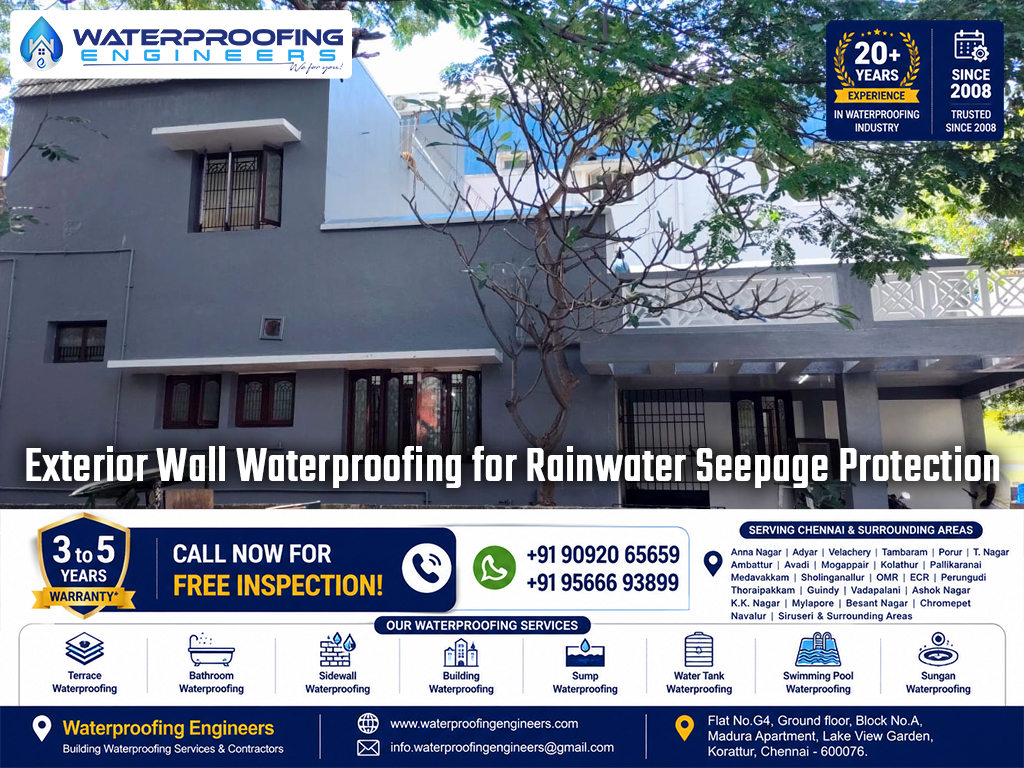
A freshly painted exterior wall can make a building look well maintained. But when the next spell of heavy rain leaves damp patches inside, peeling paint, or discoloured walls, the problem may be deeper than the finish.
Exterior wall waterproofing helps protect vulnerable walls from rainwater penetration, but the correct treatment depends on why the wall is leaking.
Cracks, porous plaster, deteriorated coatings, defective joints and poorly sealed openings can allow rainwater to enter. Water may then travel through the wall before becoming visible indoors.
Applying another coat of ordinary paint may improve the appearance temporarily without correcting the water-entry pathway.
The better approach is to inspect the wall, diagnose the cause, and choose a compatible waterproofing system.
Protect the wall beneath the paint. Find the water-entry point before choosing the treatment.
Get Free Inspection
If your exterior walls develop damp patches after rain, paint begins peeling, or moisture repeatedly appears on interior walls, arrange a professional inspection before investing in another surface repair.
Explore Waterproofing Engineers’ Building Waterproofing Services for an inspection-led approach to building water ingress.
Problem: Why Do Exterior Walls Leak During Rain?
External walls face direct rainfall, sunlight, humidity and changing temperatures. Over time, these conditions can expose weaknesses in the wall surface and its protective coating.
Common causes include:
- Cracks in plaster or masonry
- Porous concrete or plaster
- Deteriorated exterior paint
- Failed sealant around windows
- Gaps around service pipes
- Construction and movement joints
- Poorly detailed balconies and ledges
- Defective parapet junctions
- Water running down from an inadequately protected roof
- Previous repairs that did not address the source
In Chennai, monsoon rainfall can make existing weaknesses more noticeable. However, not every damp wall is caused by rain alone. Plumbing leakage, condensation, or moisture rising from another part of the building may create similar symptoms.
Warning Signs to Look For
Watch for damp patches, bubbling or peeling paint, white salt deposits, dark stains, musty odours, visible cracks and recurring moisture near windows or corners.
These signs indicate that the wall needs assessment. They do not, by themselves, prove which waterproofing method will work.
Inspection: Examine the Wall Before Applying a Coating
A proper inspection should consider the affected wall and the building details above, below and around it.
1. Check the Exterior Surface
Look for cracks, damaged plaster, loose paint, exposed masonry and deteriorated coatings. The inspection should distinguish between superficial finish damage and defects that may allow water to penetrate.
2. Inspect Windows and Openings
Window frames, sill edges, service penetrations and junctions between different materials can become entry points when sealing or detailing fails.
3. Check Joints and Connections
Balcony edges, parapets, slab-to-wall junctions and construction joints require attention. A coating applied over a defective joint may not provide a durable repair.
4. Review the Interior Symptoms
Record where dampness appears, when it becomes visible and whether it follows rainfall or plumbing use. This information helps narrow down possible causes.
5. Assess Existing Repairs
Old coatings, sealants and patch repairs should be checked for adhesion, cracking and compatibility with the proposed system.
Waterproofing Engineers describes its sidewall process as identifying the source of water ingress and selecting a suitable treatment based on wall condition and crack patterns. See Sidewall Waterproofing Services.
Diagnosis: Identify the Actual Water Pathway
Inspection gathers evidence; diagnosis helps determine the most likely source of moisture.
For example, dampness concentrated below a window may indicate a problem with the frame perimeter or sill detailing. Widespread dampness across an exposed wall may suggest porous surfaces or deteriorated protection. A recurring wet patch near a pipe could point to a service-related leak.
Where cracks appear, their width, pattern, location and movement should be assessed. Structural cracks require appropriate technical evaluation; simply covering them with a coating may not be sufficient.
The diagnosis should also consider whether water is entering through the exterior wall itself or travelling from a terrace, roof, balcony, plumbing system or adjoining area.
A waterproof coating is only as effective as the diagnosis and preparation behind it.
Exterior Wall Waterproofing Methods
There is no single coating suitable for every wall. The choice depends on the substrate, exposure, cracks, moisture condition, movement and the manufacturer’s system requirements.
1. Flexible Exterior Waterproof Coating
A suitable exterior coating can help protect compatible wall surfaces against wind-driven rain. Flexible systems may accommodate limited surface movement, provided the substrate and crack conditions are appropriate.
They are not a substitute for repairing significant cracks, defective joints or underlying structural problems.
2. Cementitious Waterproofing
Cementitious systems may suit selected mineral substrates and masonry or concrete areas, depending on the product specification and exposure conditions.
Surface preparation, curing and compatibility with the finish system are important.
3. Crack and Joint Treatment
Cracks, window perimeters and construction joints may require localized repair or compatible sealants before broader waterproofing begins. Moving joints need detailing that accommodates movement rather than a rigid patch alone.
4. Chemical Waterproofing
Chemical waterproofing may be appropriate for selected concrete surfaces and building conditions. The exact product and application should be chosen after assessing the substrate and source of leakage.
See Waterproofing Applications for the range of systems offered.
5. Injection Grouting
Where water travels through suitable cracks, joints or voids, injection grouting may be considered. It addresses specific leakage pathways and is not a replacement for a protective exterior coating where one is also required.
6. Integrated Building Waterproofing
Sometimes the wall is not the only problem. Water may be entering from the terrace, parapet, balcony, roof junction or another connected structure. In such cases, the relevant adjoining area must be inspected and treated as part of the solution.
Learn more about Terrace Waterproofing Services and Building Waterproofing Services.
Call Now / WhatsApp: +91 90920 65659
If your exterior wall becomes damp after rainfall, discuss the symptoms with a waterproofing professional before choosing a product. The inspection should establish the likely source, necessary surface repairs and the appropriate waterproofing system for the wall.
Execution: How Exterior Wall Waterproofing Should Be Carried Out
Even a suitable product can fail when applied over an unstable or poorly prepared surface.
A professional execution plan may include:
- Inspecting the wall and surrounding junctions.
- Cleaning the surface and removing loose or failed material.
- Repairing suitable cracks and damaged plaster.
- Treating joints, openings and penetrations with compatible materials.
- Allowing required repairs to cure.
- Applying primer or preparation layers where specified.
- Applying the waterproofing system according to the product instructions.
- Completing edges, terminations and vulnerable details.
- Inspecting coverage and workmanship before completion.
The work should follow the manufacturer’s application requirements, including surface moisture limits, temperature restrictions, curing time and recoating intervals. Access and safety measures are especially important for multi-storey buildings.
For wider building protection, review Building Waterproofing Services, which describes site survey, technical assessment, preparation, application and final quality inspection.
Result: What Should Proper Waterproofing Achieve?
A correctly selected and installed system should help reduce rainwater penetration and protect the wall finish and underlying building materials.
The intended outcomes include reduced dampness, fewer recurring water stains, better protection of vulnerable surfaces and less moisture-related maintenance.
Actual performance depends on the original defect, the quality of preparation, material compatibility, application conditions, exposure and ongoing maintenance. Waterproofing should not be presented as a guaranteed permanent cure without considering these factors.
If the wall has deep structural cracks, deteriorating concrete or suspected reinforcement corrosion, seek appropriate building or structural assessment alongside waterproofing advice.
Warranty and Maintenance
Before approving the work, request written details of the treatment scope and warranty conditions.
Confirm which wall areas are covered, whether crack repairs and joint sealing are included, what preparation is required, and what conditions may affect the warranty.
After completion, inspect the exterior periodically. Address new cracks, failed sealants, blocked drainage and damage caused by drilling or later construction. Keep records of the product system, completion date and maintenance instructions.
A warranty applies according to the agreed scope and terms; it does not remove the need for routine building maintenance.
Customer Testimonial
⭐⭐⭐⭐⭐
Excellent experience from inspection to completion. Their Building Waterproofing Service in Chennai was handled professionally and the results are outstanding. Highly recommended for residential projects.
10 Frequently Asked Questions
1. What is exterior wall waterproofing?
It is the process of protecting suitable exterior wall surfaces and vulnerable junctions against water penetration using compatible materials and detailing.
2. Why does my exterior wall leak when it rains?
Possible causes include cracks, porous plaster, damaged coatings, failed window seals, joints and water entering from connected roof or balcony areas.
3. Which waterproofing coating is best for exterior walls?
The correct coating depends on the substrate, exposure, cracks, movement and existing finish. Inspection should come before product selection.
4. Can exterior waterproofing be applied over paint?
Only if the existing coating is sound and compatible with the proposed system. Loose, peeling or unsuitable paint may need to be removed.
5. Will waterproofing stop paint from peeling inside?
It may help if rainwater penetration is the cause. The moisture source should be corrected and the wall allowed to dry appropriately before interior repainting.
6. Do exterior wall cracks need repair before waterproofing?
Cracks generally require assessment and suitable treatment. Moving or structural cracks may need specialist evaluation rather than simple surface filling.
7. Can waterproofing be done during the rainy season?
It depends on the product, weather conditions, substrate moisture and safe access. Many systems require dry conditions and a suitable curing period.
8. Is exterior wall waterproofing suitable for apartments?
Yes, but multi-storey work needs appropriate access, safety planning, coordination and attention to shared building details.
9. How long does exterior wall waterproofing last?
Service life varies with the system, preparation, workmanship, exposure, wall movement and maintenance. Ask for product-specific guidance and written warranty terms.
10. Who should I contact for exterior wall seepage in Chennai?
Contact a waterproofing contractor that inspects the source, explains the proposed treatment and provides a clear scope of work. You can review Waterproofing Engineers’ FAQs for general service information.
Request a Quote
Recurring exterior wall seepage can damage finishes and create continuing maintenance work. Before choosing a treatment, identify where water is entering and whether connected areas also need attention.
Request a Quote: Share the affected wall location, building type, approximate area, visible symptoms, when the dampness appears and any previous repairs. A site inspection can help establish the likely cause, preparation requirements, suitable waterproofing system and applicable warranty conditions.
Explore Exterior and Sidewall Waterproofing Services or Building Waterproofing Services for professional assessment in Chennai.
Seal the entry point. Protect the wall. Preserve the building.