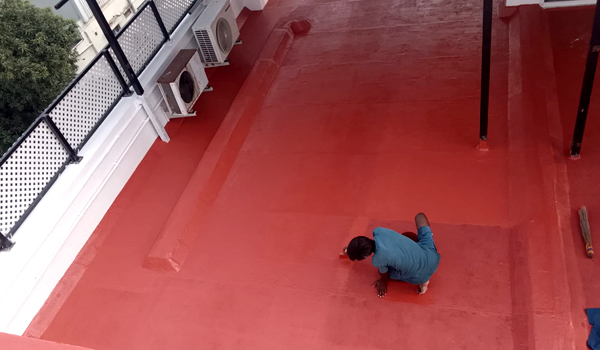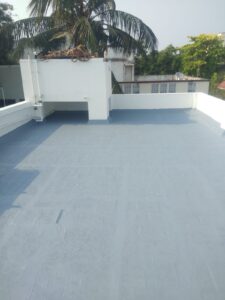
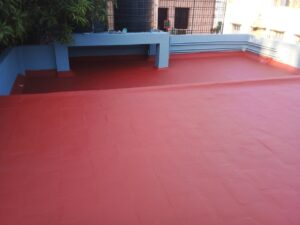
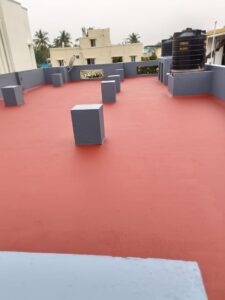
Your terrace is constantly exposed to sunlight, rain, humidity and changing weather conditions. Over time, this exposure can affect the surface, joints, drainage points and existing waterproofing system.The important thing is that terrace leakage rarely appears without warning. Small cracks, water stains, dampness, peeling coatings and standing water can all indicate that moisture is finding a way into the building.Recognizing these signs early can help property owners investigate the problem before it develops into more extensive water damage.In this guide, Waterproofing Engineers explains 10 common warning signs that may indicate your terrace needs professional waterproofing attention.
1. Water Stains on the Ceiling
One of the easiest signs to notice is a brown, yellow or dark patch appearing on the ceiling directly below the terrace.
The stain may become more visible after rainfall and may gradually increase in size. Sometimes the ceiling may remain damp even after the weather becomes dry.
However, a ceiling stain does not always mean the water is entering directly above that exact point. Water can travel through concrete and other building elements before appearing indoors.
Therefore, the terrace above the affected area should be inspected rather than simply repainting the ceiling.
What Should You Check?
Look for:
- Cracks on the terrace
- Ponding water
- Damaged waterproofing
- Pipe penetration points
- Terrace-wall junctions
- Drainage problems
2. Cracks Appearing on the Terrace
Visible cracks are another warning sign that should not be ignored.
Some cracks may be minor surface cracks, while others can become pathways for rainwater. Their significance depends on their size, location, pattern and the condition of the surrounding surface.
Cracks around corners, joints, parapet walls and service penetrations deserve particular attention.
Why Should Cracks Be Inspected?
Water can enter through vulnerable cracks and gradually travel into the underlying structure.
Simply filling a visible crack may not address the larger waterproofing problem if water is entering through another nearby area.
3. Water Stays on the Terrace After Rain
A properly functioning terrace should allow rainwater to drain efficiently.
If water remains standing for extended periods after rainfall, it may indicate a drainage, slope or surface-related issue.
Repeated ponding keeps the terrace wet for longer and can place additional stress on the waterproofing system.
Check the Drainage Outlets
Inspect whether:
- Drain outlets are blocked
- Leaves or debris are restricting flow
- Water is collecting around outlets
- The terrace has areas with inadequate drainage
4. Peeling or Damaged Waterproofing Coating
If an existing waterproofing coating is peeling, blistering, cracking or separating from the surface, it may indicate deterioration of the protective system.
A new coating should not simply be applied over a poorly prepared or damaged surface.
Why Surface Preparation Matters
Before applying a new waterproofing system, the existing surface may need cleaning, removal of loose material, crack treatment and other preparation depending on the site condition.
The correct preparation helps the selected waterproofing system bond properly with the substrate.
5. Dampness or Seepage on Walls Near the Terrace
Terrace leakage does not always appear on the ceiling.
Damp patches can also develop on walls near the terrace, particularly around parapets and terrace-wall junctions.
If the affected wall is exposed to external weather, the source could involve sidewall water penetration rather than the terrace surface alone.
In such situations, Sidewall Waterproofing Services may need to be considered as part of the overall investigation.
6. Paint Is Peeling or Blistering
Peeling paint, bubbling or blistering on the ceiling or upper walls can sometimes indicate moisture behind the surface.
Paint damage by itself does not prove that terrace leakage is the cause. Condensation, plumbing problems and other moisture sources can produce similar symptoms.
This is why identifying the source is more important than simply repainting the affected area.
Don't Treat Only the Visible Damage
Painting over a damp surface may temporarily improve its appearance, but the underlying moisture problem can remain.
The source should be investigated before finishing or repainting work.
7. Damp or Musty Odour Indoors
A persistent damp or musty smell in rooms below or adjacent to the terrace can be a sign of ongoing moisture.
The smell may become more noticeable after rainfall or when ventilation is limited.
While odour alone cannot confirm terrace leakage, it is a reason to investigate the surrounding walls, ceiling and terrace surface.
8. Leakage Around Pipes and Service Penetrations
Terraces often contain water pipes, drainage pipes, electrical conduits, equipment supports and other penetrations.
These areas can become vulnerable when the surrounding waterproofing is damaged or improperly detailed.
H3: Why Penetration Points Need Attention
A waterproofing system must be properly detailed around penetrations because these locations interrupt the continuous surface.
If leakage repeatedly appears around a pipe or service point, the area should be inspected carefully rather than treating only the visible damp patch.
9. Previous Waterproofing Has Failed
If your terrace has already been waterproofed but leakage has returned, this is an important warning sign.
Recurring leakage can happen for different reasons, including:
- Incorrect diagnosis
- Unsuitable waterproofing system
- Poor surface preparation
- Inadequate detailing
- Drainage problems
- New cracks
- Damage to the waterproofing layer
- Building movement
- Improper maintenance
Repeatedly applying another layer without understanding why the previous treatment failed may not provide the expected result.
A professional inspection can help determine what has changed and what treatment may be appropriate.
10. Leakage Appears During Every Rainy Season
If your terrace starts leaking whenever there is heavy rainfall, the recurring pattern should not be ignored.
Seasonal leakage may indicate that rainwater is entering through a vulnerable terrace area, joint, crack, drainage point or adjacent wall.
The longer the building remains exposed to repeated water penetration, the more important it becomes to investigate the cause.
For property owners considering Terrace Waterproofing Services, an inspection is a practical starting point.
What Should You Do If You Notice These Warning Signs?
The first step should be identifying the source of the water.
Avoid assuming that every ceiling stain requires the same waterproofing treatment.
A professional assessment can consider:
Terrace Surface Condition
The surface is checked for cracks, deterioration, ponding and existing waterproofing.
Drainage
Drain outlets and water flow are inspected.
Joints and Junctions
Parapet walls, slab edges and other vulnerable junctions are examined.
Service Penetrations
Pipe and conduit areas are checked for possible water entry.
Existing Waterproofing
The condition of any existing waterproofing layer is evaluated.
Which Waterproofing Method Is Suitable?
There is no universal waterproofing method that is suitable for every terrace.
The choice depends on the substrate, leakage pattern, existing system, surface condition, exposure and project requirements.
Depending on the site, possible approaches may include chemical waterproofing, membrane-based systems and other suitable treatments.
You can learn more about Chemical Waterproofing and how it is used in appropriate waterproofing applications.
For some terraces, bitumen membrane systems or other waterproofing solutions may be considered after proper assessment.
Can Early Waterproofing Prevent Major Terrace Problems?
Early attention can help property owners identify and address waterproofing issues before they become more extensive.
For example:
Small crack → Water penetration → Dampness → Repeated leakage → Surface deterioration
This does not mean every small crack will automatically cause major structural damage. However, recurring water penetration should not be ignored.
The objective of waterproofing is to control water entry and protect the building from moisture-related deterioration.
Terrace Waterproofing for Chennai Buildings
Terraces in Chennai are exposed to intense sunlight as well as seasonal rainfall. This combination can place repeated stress on exposed surfaces and waterproofing systems.
Property owners in areas such as Anna Nagar, Adyar, Velachery, Tambaram, Porur, Ambattur, Avadi, Mogappair, Kolathur, Pallikaranai, Medavakkam, Sholinganallur, OMR, ECR, Perungudi, Thoraipakkam, Guindy, Vadapalani, Ashok Nagar, K.K. Nagar, Mylapore, Besant Nagar, Chromepet, Navalur and Siruseri may encounter different building-specific waterproofing requirements.
The right approach should always be based on the actual condition of the property rather than applying the same method to every building.
When Should You Contact a Waterproofing Professional?
You should consider arranging an inspection if you notice:
- Recurring ceiling stains
- Terrace cracks
- Water ponding
- Peeling waterproofing
- Damp walls
- Paint blistering
- Persistent damp odour
- Leakage around pipes
- Failed previous waterproofing
- Seasonal terrace leakage
If the problem keeps returning, don't rely only on repainting, crack filling or other temporary repairs.
Contact Waterproofing Engineers to discuss your terrace leakage problem and arrange a professional inspection.
Why Choose Waterproofing Engineers?
Waterproofing requires more than simply applying a product to a surface.
Waterproofing Engineers combines technical experience, practical site knowledge and skilled workmanship to identify suitable waterproofing approaches for different building conditions.
Our waterproofing services cover residential, commercial and other building requirements.
We focus on:
- Site inspection
- Problem identification
- Suitable system selection
- Surface preparation
- Proper application
- Detailed workmanship
- Clear communication
- Long-term building protection
For complete solutions, explore our Building Waterproofing services.
Frequently Asked Questions
How do I know if my terrace needs waterproofing?
Recurring leakage, ceiling stains, cracks, ponding water, damaged coatings and damp walls can indicate a possible waterproofing problem. A site inspection is the best way to determine the actual cause.
Can small terrace cracks cause leakage?
Some cracks can allow water to penetrate, depending on their size, location and condition. Cracks should therefore be assessed rather than automatically ignored.
Does ceiling leakage always mean the terrace is leaking?
No. Plumbing, condensation, wall seepage and other sources can also cause ceiling dampness. The source should be identified before selecting a treatment.
Can waterproofing be done over an old waterproofing layer?
It depends on the condition, compatibility and adhesion of the existing layer. The surface should be assessed and properly prepared before deciding on the new system.
How often should a terrace be inspected?
There is no single inspection interval suitable for every building. Property owners should pay particular attention after heavy rainfall and whenever new cracks, ponding or dampness appear.
For more waterproofing questions, visit our FAQs page.
Don't Wait for a Small Terrace Problem to Become a Bigger One
Terrace leakage often provides warning signs before the problem becomes extensive.
Cracks, ponding water, damp walls, peeling coatings and recurring ceiling stains are reasons to investigate the condition of the terrace.
The objective isn't simply to hide the visible water stain. A suitable terrace waterproofing solution should begin by understanding where the water is coming from and why it is entering the building.
If you have noticed one or more of these warning signs, Waterproofing Engineers can help assess the condition and recommend an appropriate approach.