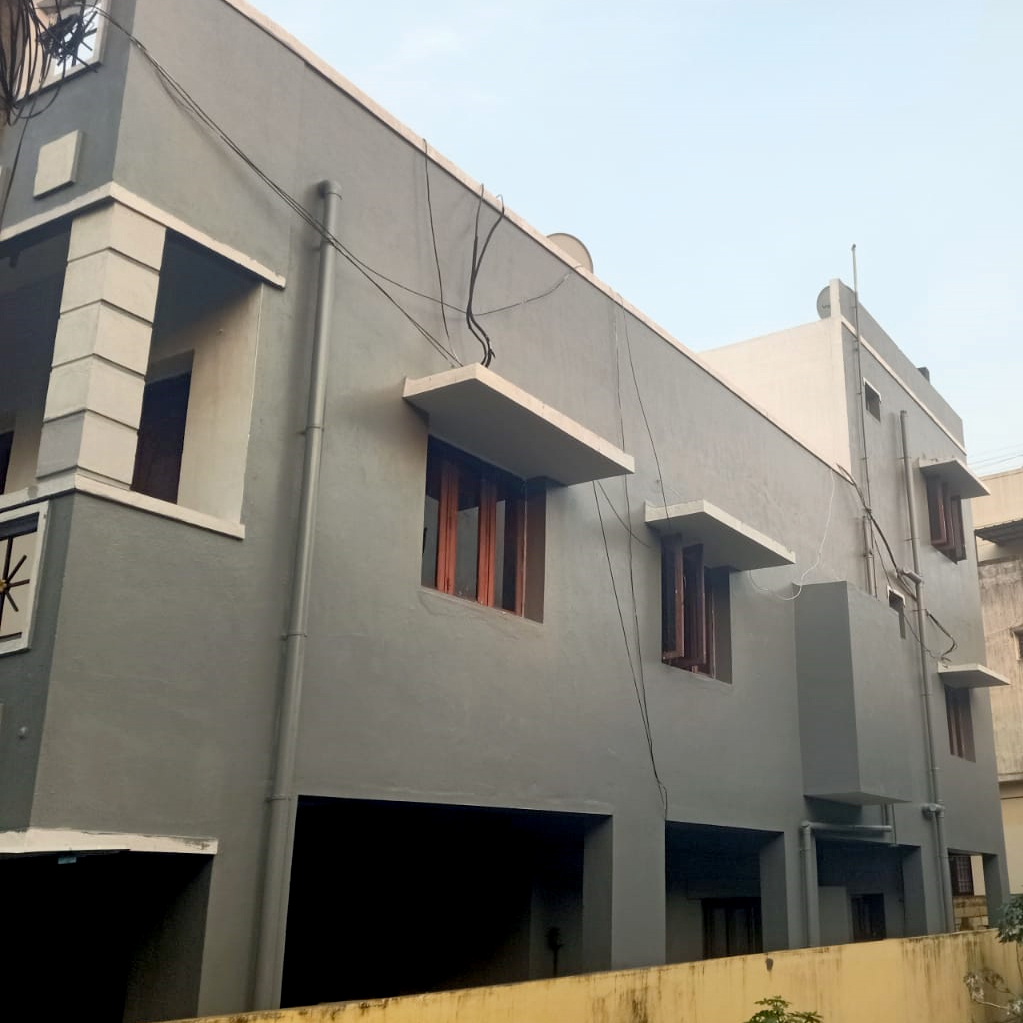
Pallavaram Building Seepage Project: Professional Sidewall Waterproofing to Reduce External Wall Water Penetration
External wall dampness can be an early warning sign that water is entering through vulnerable portions of a building envelope. What may initially appear as a small damp patch, discoloured wall or surface deterioration can become a recurring building maintenance issue when the underlying water-entry pathway is not properly addressed.
In this Pallavaram building waterproofing project, the building was experiencing external wall dampness and visible signs of water penetration affecting the wall surface. The objective was to identify vulnerable areas and carry out suitable sidewall waterproofing with crack and surface treatment.
Instead of treating only the visible dampness, the waterproofing approach focused on the external wall surface and areas that could allow further water penetration.
Waterproofing should address the pathway of water entry, not just the visible symptom of seepage.
Get Free Inspection
If your building in Pallavaram or surrounding Chennai areas is showing external wall dampness, cracks or recurring seepage, a professional inspection can help identify the likely source before selecting a treatment.
Get a Free Waterproofing Inspection from Waterproofing Engineers.
Problem: External Wall Dampness and Water Penetration
The Pallavaram building had signs of dampness affecting the external wall surface.
External wall seepage can occur for several reasons, including:
- Surface cracks
- Hairline cracks in plaster
- Porous wall surfaces
- Deteriorated external coatings
- Weak junctions
- Water penetration during rainfall
- Poorly protected external surfaces
- Ageing surface treatment
- Open or vulnerable areas around building details
A damp external wall should not automatically be assumed to have one specific cause. Water can travel through cracks and porous materials and may appear at a different location from the original point of entry.
This is why professional building waterproofing in Pallavaram begins with an assessment of the affected area.
A temporary patch over the visible dampness may provide only short-term improvement if the external water-entry pathway remains untreated.
For property owners, the warning signs may include peeling paint, damp patches, surface discolouration, plaster deterioration, algae or recurring moisture after rainfall.
When these symptoms repeatedly appear, the wall should be inspected before deciding on a waterproofing system.
Inspection: Assessing the External Wall Condition
The first stage of the Pallavaram project was to assess the affected external wall.
Inspection helps the waterproofing team understand the condition of the surface and identify vulnerable locations requiring treatment.
The assessment can include:
- Checking visible cracks
- Examining the wall surface
- Identifying areas showing dampness
- Looking for signs of water penetration
- Checking vulnerable joints and junctions
- Assessing existing surface coatings
- Identifying deteriorated or weak areas
- Evaluating the condition before waterproofing
The purpose of inspection is not simply to find where the wall looks wet.
The objective is to understand why water can penetrate the external surface and what type of treatment can help reduce further ingress.
Waterproofing Engineers provides building and sidewall waterproofing solutions based on the condition of the affected structure and the required application.
Explore Building Waterproofing Services
Explore Sidewall Waterproofing Services
Diagnosis: Identifying Vulnerable Wall Areas
Following inspection, the affected external wall areas were evaluated for suitable waterproofing treatment.
In a building seepage project, diagnosis is important because external wall dampness can have multiple contributing factors.
The assessment of this Pallavaram project indicated the need for sidewall waterproofing together with suitable crack and surface treatment.
This approach was selected to address vulnerable external areas rather than relying solely on cosmetic repair.
Why Crack Treatment Matters
Even relatively small cracks can become pathways for rainwater.
When water repeatedly enters through vulnerable cracks or deteriorated surface areas, moisture can move into the wall assembly and eventually contribute to internal dampness.
Crack treatment therefore forms an important part of many external wall waterproofing projects.
Why Surface Treatment Matters
A waterproofing system needs a suitable surface on which to perform.
Loose, damaged or unsuitable surface material may need to be treated before the waterproofing application.
Surface preparation and treatment help create a more suitable base for the selected waterproofing system.
Read About Waterproofing Applications
Correct diagnosis determines the treatment. A waterproofing material should be selected according to the wall condition, exposure and source of water penetration.
Call Now / WhatsApp
If your external wall shows recurring dampness, cracks or rain-related seepage, do not wait until the surface deterioration becomes more extensive.
Call or WhatsApp Waterproofing Engineers for a professional waterproofing assessment.
Waterproofing Method: Sidewall Waterproofing with Crack and Surface Treatment
The selected solution for the Pallavaram building involved sidewall waterproofing supported by suitable crack and surface treatment.
Sidewall waterproofing is intended to protect vulnerable external wall surfaces against water penetration.
The exact products, coating layers and preparation requirements should always be determined according to the site condition and selected waterproofing system.
Step 1: Prepare the Affected Surface
The affected external surface is prepared so that unsuitable loose material, dirt or deteriorated portions do not interfere with the waterproofing treatment.
Proper preparation is an essential part of external wall waterproofing.
Step 2: Treat Vulnerable Cracks
Visible cracks and vulnerable areas are treated according to their condition.
The objective is to reduce potential pathways through which rainwater could enter the wall.
Step 3: Carry Out Surface Treatment
Suitable surface treatment is carried out over the affected external wall areas.
The treatment is selected according to the condition of the substrate and the requirements of the waterproofing system.
Step 4: Apply the Sidewall Waterproofing System
The selected waterproofing treatment is applied to the prepared sidewall surface.
Application should be carried out systematically to provide consistent coverage over the specified treatment area.
Step 5: Inspect Treated Areas
After execution, the treated surface is checked for visible defects, missed areas and continuity of the waterproofing treatment.
A professional waterproofing project should include attention to surface preparation, application quality and vulnerable details.
Explore Professional Waterproofing Services
Execution: Professional Waterproofing Work in Pallavaram
Execution is where the diagnosis and waterproofing plan are converted into actual site work.
For the Pallavaram project, the focus was on treating the vulnerable external wall surfaces identified during assessment.
The work involved suitable crack treatment and external surface preparation followed by sidewall waterproofing.
The objective was not simply to improve the appearance of the wall.
The treatment was carried out to help create a more water-resistant external surface and reduce the possibility of further water penetration.
Quality execution is particularly important for external walls because the waterproofing layer must withstand direct environmental exposure.
Rainfall, sunlight, surface movement and building conditions can all influence waterproofing performance.
For this reason, waterproofing work should be performed by an experienced team familiar with external wall and building seepage conditions.
Learn More About Waterproofing Engineers
Result: Treating Vulnerable External Surfaces
After the waterproofing work, the vulnerable external wall surfaces identified during the project were treated.
The project objective was to help reduce further water penetration through the affected external areas.
The result of the treatment was focused on:
- Addressing vulnerable external surfaces
- Treating suitable cracks
- Improving surface protection
- Reducing potential water-entry pathways
- Protecting the affected building surface
- Supporting longer-term building maintenance
It is important to understand that waterproofing performance depends on several factors, including building movement, future cracking, drainage, weather exposure, substrate condition and maintenance.
Therefore, a responsible waterproofing contractor should avoid making unrealistic guarantees that every seepage condition will remain unchanged indefinitely.
Customer Testimonial
“The external wall had developed dampness and signs of water penetration. The waterproofing team inspected the affected area, explained the treatment and carried out the sidewall waterproofing work systematically. The external surface was treated to address the vulnerable areas.”
Warranty: Waterproofing with Defined Project Terms
Waterproofing Engineers provides warranty-supported waterproofing work, with the applicable warranty period depending on the selected system, project scope, materials, workmanship and agreed quotation.
Warranty terms should always be provided in writing.
Property owners should review:
- Waterproofing scope
- Treated areas
- Selected system
- Warranty duration
- Maintenance requirements
- Exclusions and site conditions
A warranty is most meaningful when the project scope and responsibilities are clearly documented.
Explore Waterproofing Services
Why Professional Building Waterproofing Matters
External wall seepage should not always be treated as a painting problem.
If water is repeatedly entering through the external wall, repainting alone may not address the underlying issue.
Professional building waterproofing services consider the condition of the surface and the likely water-entry pathways before selecting the appropriate treatment.
Waterproofing Engineers provides waterproofing solutions for different building areas and applications, including sidewalls, terraces, bathrooms, sumps, water tanks, lift pits and swimming pools.
View All Waterproofing Applications
General FAQs
- What causes external wall seepage?
External wall seepage can result from cracks, porous surfaces, deteriorated coatings, vulnerable joints, rainfall exposure and other pathways that allow water to enter the building.
- Can cracks cause wall dampness?
Yes. Cracks can provide pathways for rainwater to enter the external wall and may contribute to dampness.
- What is sidewall waterproofing?
Sidewall waterproofing is a treatment applied to external wall surfaces to help reduce water penetration through vulnerable areas.
- Is painting enough to stop wall seepage?
Not necessarily. If water is entering through cracks or other external pathways, painting alone may not address the source.
- Should external walls be inspected before waterproofing?
Yes. Inspection helps identify the condition of the wall and supports selection of a suitable waterproofing treatment.
- Can old external wall waterproofing be repaired?
Depending on its condition, existing waterproofing may be repaired, recoated or replaced. The correct approach requires site assessment.
- Is sidewall waterproofing suitable for all buildings?
No single waterproofing method is suitable for every building. The treatment should be selected according to the wall condition and source of water penetration.
- Can waterproofing prevent all future wall cracks?
No waterproofing system can guarantee that a building will never develop future cracks. Building movement and environmental conditions can create new vulnerabilities.
- When should I call a waterproofing contractor?
Contact a professional when you notice recurring dampness, cracks, peeling paint, water stains or seepage after rainfall.
- Do Waterproofing Engineers provide building waterproofing in Pallavaram?
Waterproofing Engineers provides waterproofing services across Chennai and surrounding areas, including building and sidewall waterproofing applications.
Contact Waterproofing Engineers
Request a Quote
If your Pallavaram building is experiencing external wall dampness, recurring seepage or signs of water penetration, the first step should be a professional inspection.
Request a Quote based on your building’s actual condition, affected area and required waterproofing treatment.
Do not rely on repeated temporary repairs when the same seepage problem keeps returning.
Inspect the wall. Identify the vulnerable areas. Select the right waterproofing treatment. Execute it professionally.