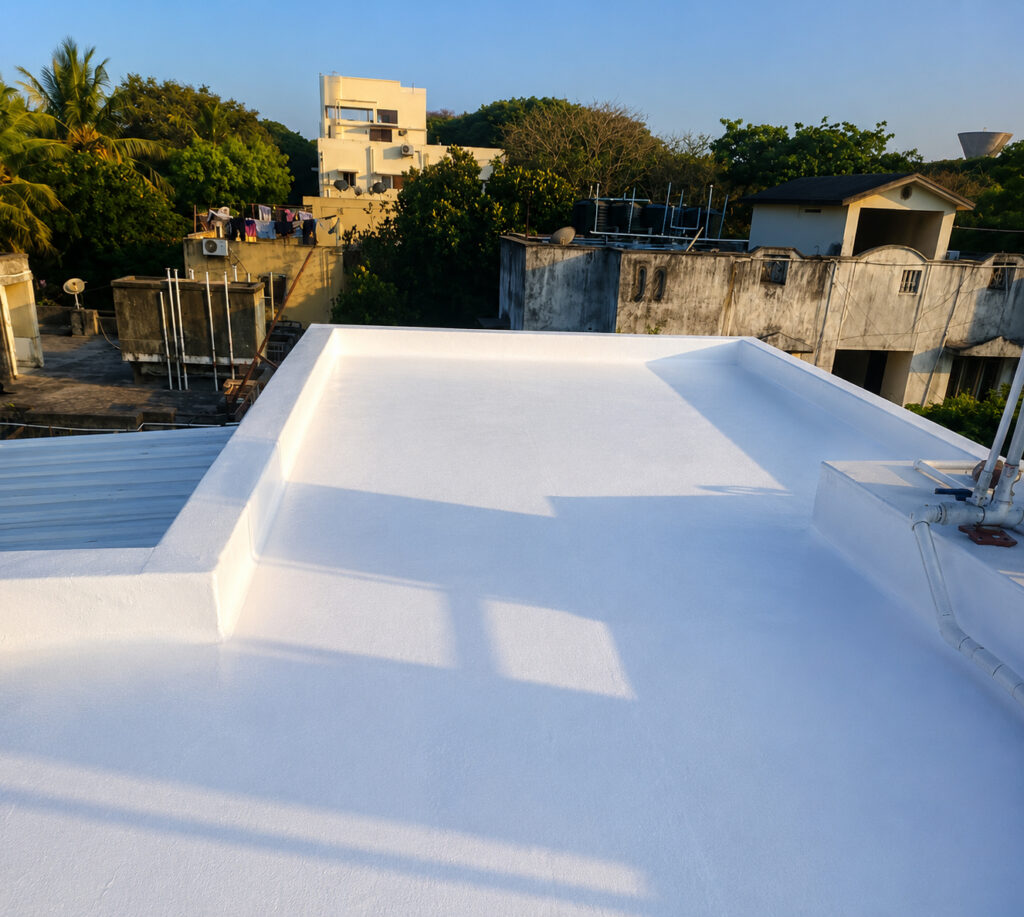
Pallavaram Building Seepage Treatment for External Wall Dampness
External wall dampness can begin as a small stain or patch but may become a recurring maintenance problem when rainwater continues to reach vulnerable areas. Cracks, surface deterioration, open joints and weak points around building elevations can provide pathways for moisture to enter the construction.
The Pallavaram Building Seepage Project involved a building where external wall dampness and signs of water penetration were affecting the surface. The objective was to examine the affected external areas, identify vulnerable portions and provide a suitable sidewall waterproofing treatment.
The treatment selected for the project included surface preparation, suitable crack treatment and sidewall waterproofing. Instead of focusing only on the visible dampness, the work considered the external surface where rainwater could enter.
This approach is particularly useful for buildings exposed to Chennai’s changing weather conditions. External walls receive direct rainfall and sunlight, and repeated exposure can gradually affect surface coatings and vulnerable areas.
For property owners dealing with similar problems, Building Waterproofing Services can be planned according to the building’s condition, location of dampness and likely water-entry points.
Get Free Inspection
If you are noticing external wall dampness, peeling paint, recurring stains or moisture after rainfall, arrange an inspection before the affected area becomes more extensive.
Call Waterproofing Engineers:
+91 90920 65659 / +91 95666 93899
You can also use the Contact Us page to enquire about a building seepage inspection in Pallavaram.
Problem, Inspection and Diagnosis of the Building Seepage
The primary issue at the Pallavaram property was dampness on the external wall with visible signs of water penetration. The affected surface required attention because continued exposure to moisture can gradually affect external finishes and, depending on the construction, contribute to dampness on the interior side.
A visible damp patch does not always reveal the exact location where water entered the building. Water may travel through cracks, porous portions, joints or construction layers before becoming visible.
The inspection therefore considered the condition of the affected external surfaces and potential vulnerable points.
Inspection
The inspection focused on:
- External wall surface condition
- Visible damp and moisture marks
- Cracks and surface openings
- Areas exposed directly to rainfall
- Wall junctions and transitions
- Deteriorated surface portions
- Existing coating condition
- Potential water-entry pathways
- Areas requiring crack treatment
- Surfaces requiring waterproofing preparation
Surface condition is important because waterproofing material should not simply be applied over loose, weak or unsuitable portions of an existing wall.
Diagnosis
The reported condition indicated the need for sidewall waterproofing supported by suitable crack and surface treatment.
Cracks can be particularly vulnerable on external walls because rainwater can repeatedly enter the opening. However, every crack is not identical. Its size, location, movement and surrounding surface condition should be considered before selecting the appropriate treatment.
The diagnosis therefore focused on treating the identified vulnerable portions before applying the waterproofing system.
“Where the moisture appears and where the water enters are not always the same place.”
This is why identifying the likely external entry route is an important part of building seepage treatment.
For properties with dampness affecting other areas, Sidewall Waterproofing Services can be considered along with other building-specific waterproofing solutions.
Sidewall Waterproofing Method and Execution
The treatment for the Pallavaram project was based on sidewall waterproofing with suitable crack and surface treatment. The work was approached in stages so that the waterproofing system could be applied over a properly prepared external surface.
1. Surface Preparation
The first requirement was to prepare the affected external wall portions for treatment.
Dust, loose particles, deteriorated surface material and unsuitable portions can affect the bonding and continuity of a waterproofing system. Appropriate preparation helps create a more suitable base for the subsequent treatment.
The extent of preparation depends on the existing wall finish, deterioration and condition of the surface.
2. Crack Treatment
The relevant cracks and vulnerable openings were assessed and treated as required.
Crack treatment is an important part of external waterproofing because untreated openings can continue to provide potential pathways for rainwater. The treatment required depends on the size, location and characteristics of the crack.
Particular attention should be given to:
- Visible cracks
- Wall junctions
- Construction transitions
- Openings and penetrations
- Deteriorated surface areas
- Locations repeatedly exposed to rainwater
3. Sidewall Waterproofing
After preparation and crack treatment, a suitable waterproofing system was applied to the required external wall areas.
The purpose of sidewall waterproofing is to improve the wall’s resistance to water penetration and provide protection over vulnerable surfaces.
The appropriate material and application method should always be selected according to the substrate, existing finish, exposure and site requirements.
Waterproofing Engineers also provides Chemical Waterproofing Services, Bitumen Waterproofing Services, PU Chemical Coating Services and Chemical Grouting Services.
4. Coverage and Finishing
The treated external surfaces were given appropriate coverage according to the planned waterproofing system. Vulnerable transitions and previously identified areas required careful attention so that the treatment could provide a more continuous protective layer.
5. Curing and Review
The completed treatment requires appropriate curing or setting according to the waterproofing material and site conditions. Weather conditions can also influence the practical application and curing process.
A final review helps identify visible defects and confirms that the planned treatment has been completed over the intended areas.
Call Now / WhatsApp
Experiencing external wall seepage in Pallavaram, Chennai?
Call: +91 90920 65659 / +91 95666 93899
WhatsApp: Send photographs of the affected wall and describe when the dampness appears. This can help the team understand the visible symptoms before arranging a site inspection.
You can also explore Terrace Waterproofing Services, Bathroom Waterproofing Services, Sump Waterproofing Services and Water Tank Waterproofing Services.
Result, Warranty and Customer Testimonial
Following the treatment, the vulnerable external surfaces were treated with sidewall waterproofing along with suitable crack and surface treatment.
The intended result was to improve resistance against further water penetration through the treated portions and provide renewed protection to the affected external surfaces.
The project demonstrates why building seepage should be approached by considering the external surface rather than repeatedly repairing only interior symptoms. If water continues to enter from the outside, interior repainting may not address the underlying moisture pathway.
However, waterproofing performance depends on the overall condition of a building. New cracks, structural movement, plumbing defects, drainage problems or subsequent construction work can create new sources of moisture.
Other applications offered by Waterproofing Engineers include Underground Waterproofing Services, Sunkun Waterproofing Services, Lift Waterproofing Services, Swimming Pool Waterproofing Services and Epoxy Tile Grouting Services.
Warranty
The applicable warranty should be based on the actual waterproofing system installed, work performed and written project documentation.
Warranty duration, coverage and exclusions can vary according to the treatment method, surface condition and project specifications. Customers should retain their quotation, invoice, treatment details and warranty document.
A waterproofing warranty should not be treated as an unconditional guarantee against every future source of dampness. New structural cracks, plumbing leakage or drainage problems may require separate investigation.
Customer Testimonial
“The external wall had developed dampness and we were concerned about water entering the building during rainfall. The affected surface was inspected, the vulnerable areas were treated and sidewall waterproofing was carried out. The work was focused on the areas where the seepage problem was noticed.”
— Velmurugan, Pallavaram House project
General FAQs – Pallavaram Building Waterproofing
- What causes external wall dampness?
External wall dampness can be caused by rainwater penetration, cracks, deteriorated coatings, open joints, porous surfaces or other construction vulnerabilities exposed to moisture.
- Can rainwater enter through external wall cracks?
Yes. Cracks can provide pathways for rainwater, particularly when the affected wall is exposed directly to heavy or repeated rainfall.
- What is sidewall waterproofing?
Sidewall waterproofing is a treatment applied to suitable external wall surfaces to improve their resistance to water penetration. The appropriate system depends on the building and surface condition.
- Why should cracks be treated before waterproofing?
Cracks can remain potential water-entry points. Treating relevant cracks before the main waterproofing application can help address these vulnerabilities.
- Can external dampness appear inside the building?
Yes. Moisture entering through an external wall can travel through construction materials and eventually appear as stains, damp patches or peeling paint on the interior.
- Is painting enough to solve external wall seepage?
Painting may improve appearance but does not necessarily address the source of water penetration. If rainwater is entering through cracks or vulnerable surfaces, the underlying problem should be investigated.
- Can sidewall waterproofing fix plumbing leakage?
Not necessarily. If the moisture source is a defective plumbing line, the plumbing problem needs to be addressed separately. Waterproofing should target the actual source of water entry.
- How long does external wall waterproofing take?
The duration depends on the affected area, preparation requirements, crack treatment, waterproofing system, accessibility, weather and curing conditions.
- Can an existing building be waterproofed?
Yes, many existing buildings can receive external waterproofing treatment. However, the appropriate method depends on the condition of the wall, existing coating, cracks and other site-specific factors.
- How can I arrange building waterproofing in Pallavaram?
Contact Waterproofing Engineers at +91 90920 65659 / +91 95666 93899. You can explain the seepage problem and share photographs through WhatsApp before arranging a suitable site inspection.
Request a Quote for Pallavaram Building Waterproofing
If your building in Pallavaram has external wall dampness, rainwater penetration, cracks or recurring seepage, an inspection can help identify the likely water-entry areas and determine a suitable waterproofing approach.
Suggested Quote Content
“Hello Waterproofing Engineers, I need a building waterproofing inspection in Pallavaram, Chennai. The external wall is showing dampness and signs of water penetration. Please inspect the affected areas, recommend suitable sidewall waterproofing and crack treatment, and provide a quotation.”
Call: +91 90920 65659 / +91 95666 93899
Email: info.waterproofingengineers@gmail.com
For other waterproofing requirements, visit the complete Waterproofing Services section or review the Waterproofing FAQs.
You can also learn about PU Chemical Grouting Services and Crystalline Treatment Services for other types of water penetration problems.
“Inspect the surface. Treat the cracks. Strengthen the building against water penetration.”